Table of Contents:
- Digital price tags are now the default in supermarkets, not the exception
- Self-service ordering is settling into two formats, not one winner
- Digital signage is moving from novelty to infrastructure
- Pricing compliance scrutiny is increasing, not easing off
- Queue management and wayfinding are expanding into healthcare
- What’s being watched but not yet proven locally
- What this means for NZ businesses
- FAQs
Most “retail trends” content is written a year in advance and full of predictions that don’t hold up. This isn’t that. Every trend below is something already measurable in New Zealand right now, backed by a real source, not a forecast. If you run a retail, hospitality or healthcare business and want to know what’s actually changing rather than what a vendor wants you to believe is changing, this is the honest version.
Digital price tags are now the default in supermarkets, not the exception:
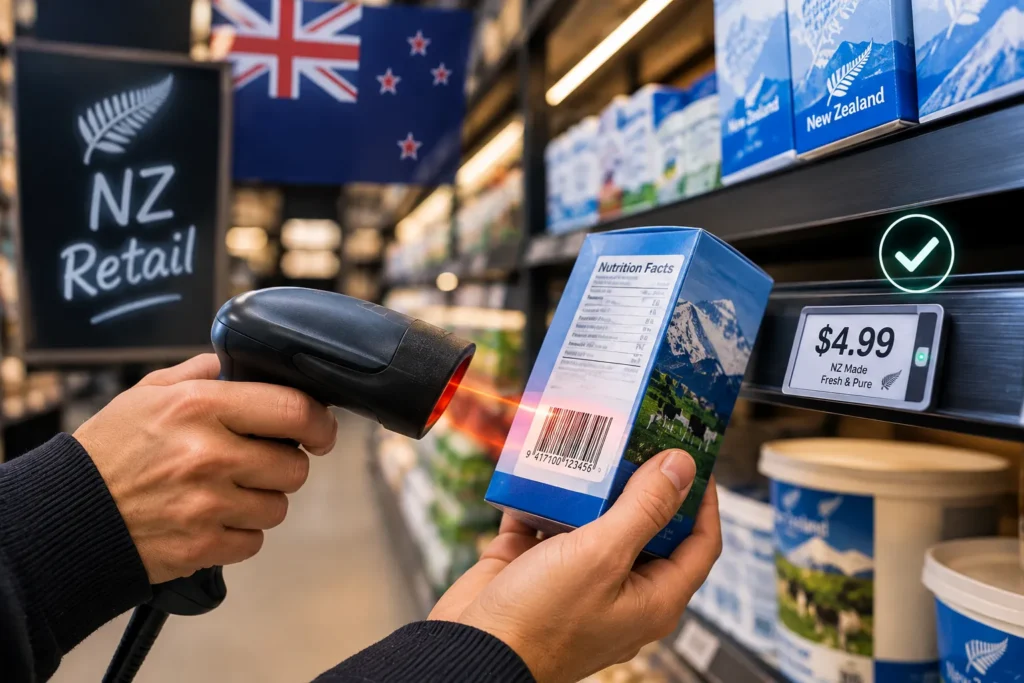
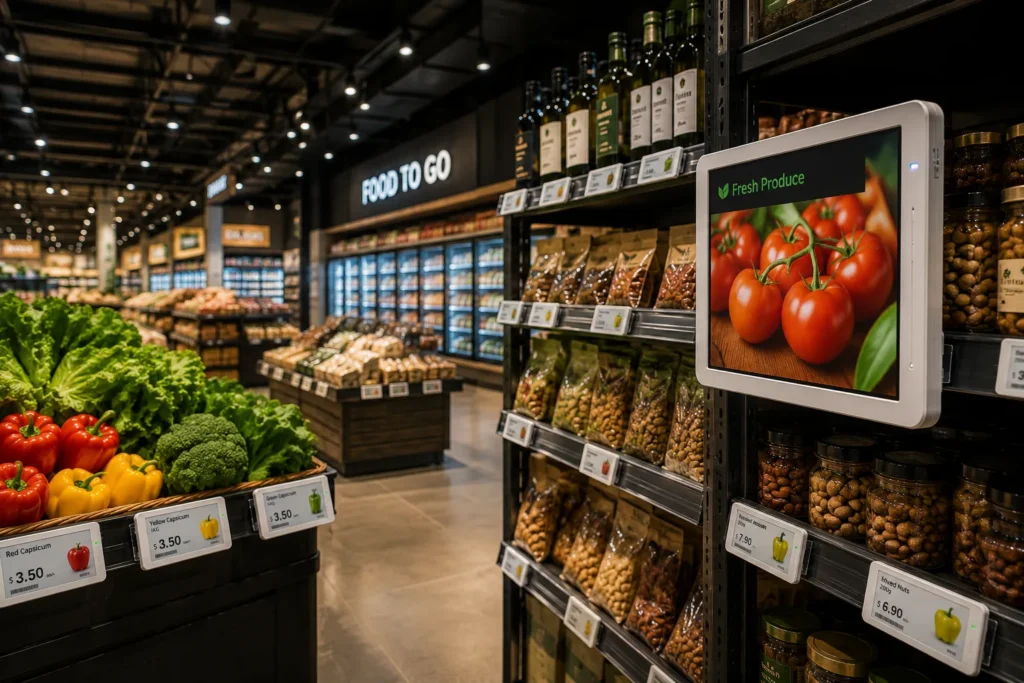
As at July 2025, RNZ reported that 91% of Foodstuffs PAK’nSAVE stores and 96% of New World stores in the North Island had digital price tags installed, and Woolworths NZ has said it uses them in almost all of its stores too. This isn’t a trend still building momentum, for major supermarket chains it’s close to finished. What’s shifting now is which smaller and independent retailers follow, not whether the technology gets adopted at all. We cover the adoption numbers and the reasoning behind the shift in why NZ supermarkets are switching to digital price tags, and what it actually costs in our digital price tags cost guide.
Self-service ordering is settling into two formats, not one winner:
Self-ordering kiosks and QR code ordering both grew fast in NZ hospitality, and neither has won outright, because they solve different problems. Kiosks suit walk-up and takeaway volume, QR ordering suits table service where the customer is already seated. The trend worth watching isn’t “which one wins,” it’s how many venues are now running both formats for different parts of the same business rather than picking a single system. We go through the practical comparison in self-ordering kiosk vs QR code menu ordering.
Digital signage is moving from novelty to infrastructure:
Digital signage used to be something only larger retailers invested in. It’s increasingly treated as standard infrastructure now, the same way a EFTPOS terminal or a point-of-sale system is, rather than a marketing extra. Content management software has made it manageable for smaller operators too, not just chains with a dedicated marketing team. We cover what it actually is and how it works across retail, hospitality and healthcare in
what is digital signage.
Pricing compliance scrutiny is increasing, not easing off:
This is a real, dated, measurable change, not a soft trend. The Commerce Commission increased maximum Fair Trading Act penalties from $600,000 to as much as $5 million in 2025, and has separately estimated that pricing errors cost New Zealanders tens of millions of dollars a year. For any retailer still relying on manual paper tags, that’s a compliance exposure that’s grown, not shrunk. We cover exactly what this means at the shelf edge in scanner price accuracy and the Fair Trading Act.
Queue management and wayfinding are expanding into healthcare:
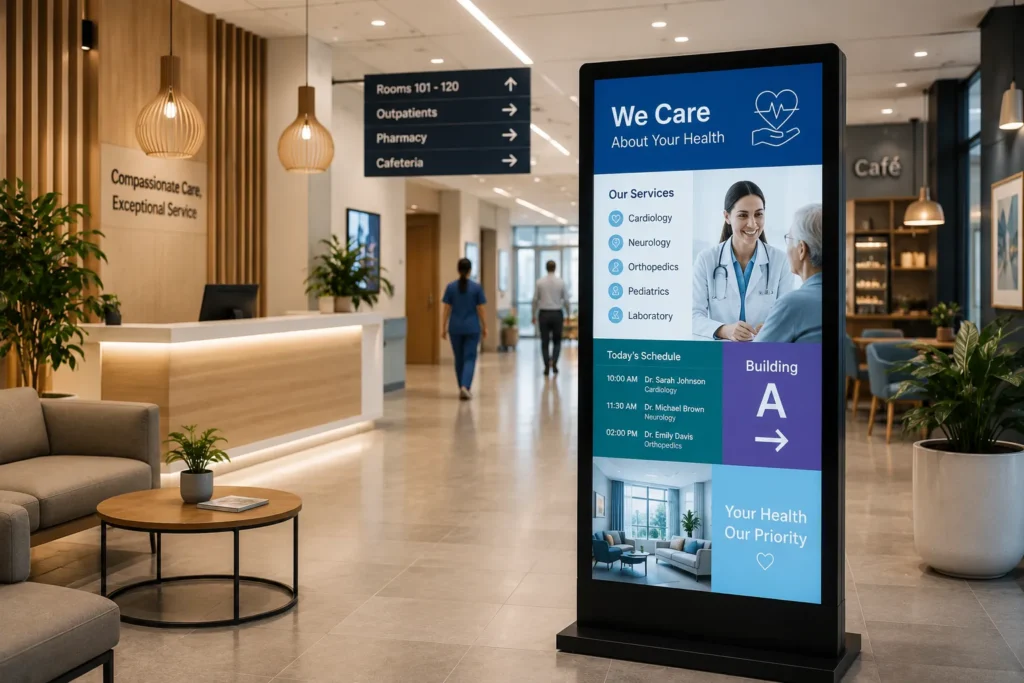
Queue and visitor management systems used to be associated mainly with retail checkouts and government service counters. That’s changing, GP clinics and healthcare providers are increasingly looking at patient sign-in kiosks and queue management specifically for clinic and waiting room settings, not just adapting a retail product. Wayfinding is following a similar pattern in larger facilities like malls and hospitals, where helping people find the right department or store matters as much as the transaction itself.
What's being watched but not yet proven locally:
AI-driven personalisation and predictive tools are a genuine global retail direction, and firms like PwC and Deloitte have published dedicated 2026 reports specifically on how this is affecting New Zealand consumer behaviour. We’re not going to repeat specific numbers from those reports here that we couldn’t independently verify, but the direction is worth watching rather than dismissing. If your business is considering AI-driven tools, treat 2026 as the year to watch closely, not necessarily the year to commit budget without a clear, specific use case.
What this means for NZ businesses:
None of this requires an all-at-once overhaul. The realistic path is picking the trend that maps to your actual bottleneck, pricing accuracy if you’re running high SKU counts, self-service if your queue or wait times are the real friction point, signage if your promotions or menu changes are still manual, and building from there. Our full solutions range covers all of these under one vendor relationship, which matters if you’d rather manage one supplier than five.
Not sure which of these fits your business first? EON Solutions covers electronic shelf labels, digital signage, queue management, wayfinding and self-service kiosks under one vendor relationship across New Zealand.
📞 +64 20 4153 3999
📧 info@eonsolutions.co.nz
📍 Serving businesses nationwide across New Zealand
💬 WhatsApp us
📩 Request a Quote
Related Solutions:
Written by Tejas Chandegara, EON Solutions.
Frequently Asked Questions About Retail Technology Trends in New Zealand: