Table of Contents:
Electronic shelf labels usually get pitched on two things: keeping the shelf price and till price in sync, and cutting the staff time spent swapping paper tags by hand. Both are real. There’s a third angle that gets mentioned far less often, and it has nothing to do with labour cost. Every paper price tag a store prints gets thrown away the moment the price changes again, and for a store running frequent promotions, that adds up to a genuine, ongoing stream of paper and ink waste.
This isn’t a claim that digital labels make a store environmentally friendly on their own. It’s a look at what specifically changes, and what doesn’t, when the paper stops.
What paper price tags actually cost in waste:
A paper price tag is a single-use item by design. It gets printed, fitted to a shelf, and pulled down the moment the price or promotion changes, whether that’s a day later or a few months later. In a store running weekly specials across a few hundred SKUs, that’s a steady, repeating cycle of printing and binning, week after week, all year.
Nobody tends to measure this directly, because it’s spread across a printer, a roll of stock, and a bin, rather than showing up as a single line item anywhere. That doesn’t mean it isn’t real, it just means it’s easy to overlook next to more visible costs like staff wages.
The environmental case for electronic shelf labels:
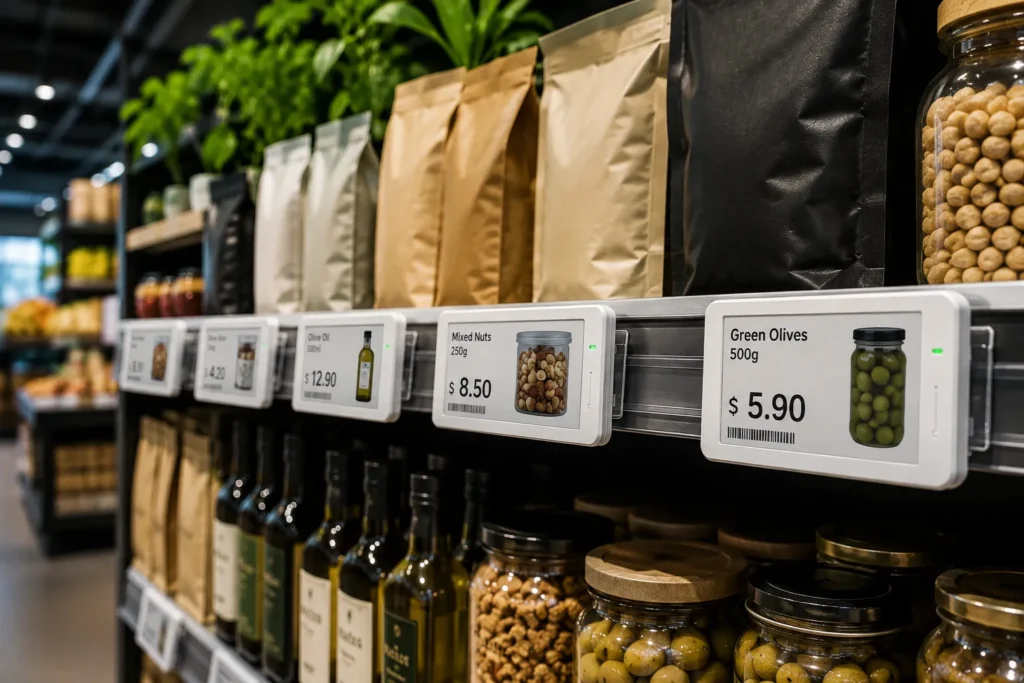
An electronic shelf label removes the reprint cycle at the source. The same physical tag stays on the shelf for years, and a price change happens in software rather than at a printer. No new paper, no new ink, and nothing goes in the bin when a price updates.
The label itself has its own footprint, manufacturing, battery, and eventual disposal or recycling at end of life, so it isn’t a zero-impact swap. The comparison that matters is against years of continuous paper reprinting, not against a single paper tag.
Quick facts:
Where this fits into a wider sustainability story:
For a lot of retailers, paper waste from price tags is a small piece of a much bigger sustainability picture, packaging, freight, refrigeration, and energy use all tend to matter more. Electronic shelf labels aren’t going to be the headline of a sustainability report on their own.
Where they do add up is as one of several small, ongoing operational changes that a retailer can point to honestly, rather than a single dramatic claim. If sustainability reporting or a stated environmental commitment is part of how a business already talks to customers, this is a genuine, if modest, part of that picture.
Is this a genuine business case or just marketing:
Both, honestly. The paper and labour savings are real and measurable on their own, which is why most retailers install electronic shelf labels for operational reasons first. The sustainability angle is a genuine secondary benefit, not the main reason to buy, and it’s worth being upfront about that rather than leading with an environmental pitch that oversells what a shelf label actually changes.
What to check before you switch:
- Ask your supplier what happens to labels at end of life, whether they’re recyclable and how that’s handled.
- Check expected battery life and replacement cycle, since batteries are the main ongoing waste stream a digital label does still produce.
- Work out your current paper tag volume first. A rough count of how often you reprint gives a more honest before-and-after picture than assuming a generic saving.
- If sustainability reporting matters to your business, ask whether your supplier can provide anything in writing to support that reporting, rather than relying on general marketing claims.
Talk to an Electronic Shelf Label Specialist in New Zealand
Frequently Asked Questions About Electronic Shelf Labels and Sustainability in New Zealand: