Table of Contents
- How digital price tags actually work
- How many NZ supermarkets already use them
- How adoption has grown over time
- Why supermarkets are switching
- The dynamic pricing question
- What it means for shoppers
- What it means for retailers considering the switch
- Questions worth asking before you switch
- FAQs
Digital price tags are showing up in more New Zealand supermarket aisles every year, and they’ve started a real public conversation, not just a retail one. Some shoppers see convenience. Others worry it opens the door to prices that change depending on who’s looking, or when. This post looks at what’s actually happening in New Zealand right now, based on reporting from RNZ, and separates the real story from the speculation.
How digital price tags actually work
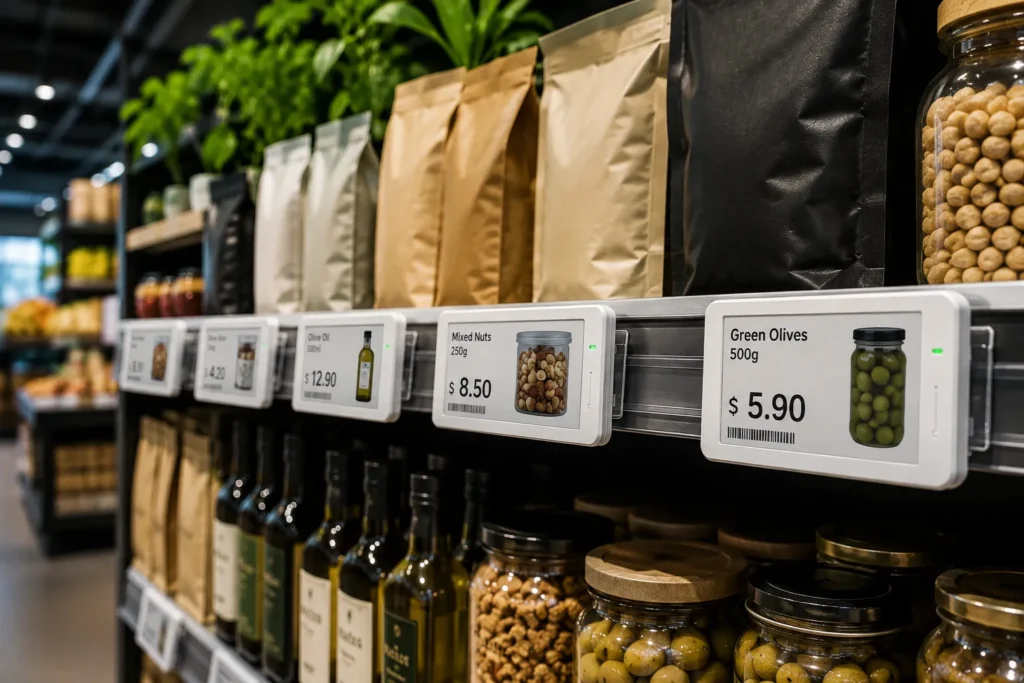
The system has three parts working together. Each shelf carries a small e-paper display, similar screen technology to an e-reader, showing the current price. A wireless gateway, usually one or a few per store, pushes price updates out to every label at once. Software connects that gateway to the store’s point-of-sale or ERP system, so when a price changes centrally, every label showing that product updates within minutes rather than whenever someone gets around to it with a new paper tag.
E-paper displays only draw power when the image actually changes, which is why the batteries in these labels typically last years rather than months. We cover the hardware and cost side of this in more detail in our guide to digital price tag pricing in New Zealand.
How many NZ supermarkets already use them
This is further along than most shoppers realise. RNZ reported that as at July 2025, 43 of Foodstuffs’ 47 PAK’nSAVE stores and 101 of its 105 New World stores in the North Island had digital price tags installed.
Woolworths NZ has told RNZ it also uses electronic shelf labelling in almost all of its stores.
How adoption has grown over time
This isn’t a sudden shift. Foodstuffs first trialled electronic shelf labels at New World Hastings roughly two decades ago, and adoption stayed gradual for a long time. Industry reporting from 2018 put the figure at 45 of Foodstuffs’ 138 New World stores nationally, around a third, with roughly 70 Foodstuffs stores using the technology across New World, PAK’nSAVE and Four Square combined at that point.
By July 2025, RNZ’s figures show close to all North Island New World and PAK’nSAVE stores had made the switch. The exact store counts from 2018 and 2025 aren’t a perfect apples-to-apples comparison since the earlier figure was nationwide and the later one is North Island specific, but the direction is unmistakable: what took over a decade to reach roughly a third of stores has, in the years since, become close to standard.
Why supermarkets are switching
The driver is operational, not strategic pricing games. A supermarket carries tens of thousands of SKUs, and prices on specials, promotions and supplier cost changes shift constantly. Doing that by hand means printing a new tag, walking the floor, pulling the old one and fitting the new one, for every single change, in every single store. Digital price tags update the whole store at once from a central system, which cuts labour hours and reduces the gap between what a product is meant to cost and what’s actually on the shelf.
It also changes what staff spend their time on. Hours that used to go into manually re-tagging shelves can go into customer-facing work instead, and a storewide promotion can go live the moment it’s approved rather than whenever someone finishes walking every aisle.
The dynamic pricing question
This is the part that worries people, and it’s worth addressing directly rather than dismissing it. Because digital price tags can technically update prices instantly, some see them as a step toward supermarkets changing prices throughout the day based on demand, similar to how flight or rideshare pricing works.
On the record, Woolworths NZ has told RNZ it does not use dynamic or personalised pricing. The technology being capable of something isn’t the same as a retailer doing it, and New Zealand’s Fair Trading Act still governs what a displayed price has to mean at checkout, regardless of whether that price sits on paper or a screen. We go through what that actually requires in a separate post on scanner price accuracy and the Fair Trading Act.
What it means for shoppers
In practice, day to day shopping doesn’t change much. Prices should be more accurate and more consistent with what scans at the till, since there’s no lag between a system update and someone physically re-tagging the shelf. Some digital displays also show unit pricing more clearly than a small paper tag can, which makes comparing similar products easier, not harder. The main thing worth watching, as a shopper or as an industry, is whether retailers stay transparent about how and why prices move, not whether the tags themselves are digital or paper.
What it means for retailers considering the switch
If close to all of Foodstuffs’ North Island stores already run digital price tags, retailers who haven’t made the switch are now the exception rather than the norm. The business case is pricing accuracy and staff time, not the ability to change prices more often. Fewer manual re-tags also means fewer opportunities for a shelf price to drift out of line with what’s charged at the till, which matters under the Fair Trading Act regardless of store size.
For a full breakdown of what a system like this actually costs to install and run, see our digital price tags cost guide.
Questions worth asking before you switch
- Does the system integrate with your existing POS or ERP?
- How much staff time currently goes into manual price changes across your stores?
- How often do your prices actually change, and how much of that is promotional?
- Are you running multiple stores that would benefit from updating prices centrally?
- Who provides installation and ongoing support in New Zealand, not just the hardware?
Considering digital price tags for your own stores? EON Solutions supplies, installs and supports the full system across New Zealand.
Frequently Asked Questions About Digital Price Tags at NZ Supermarkets